

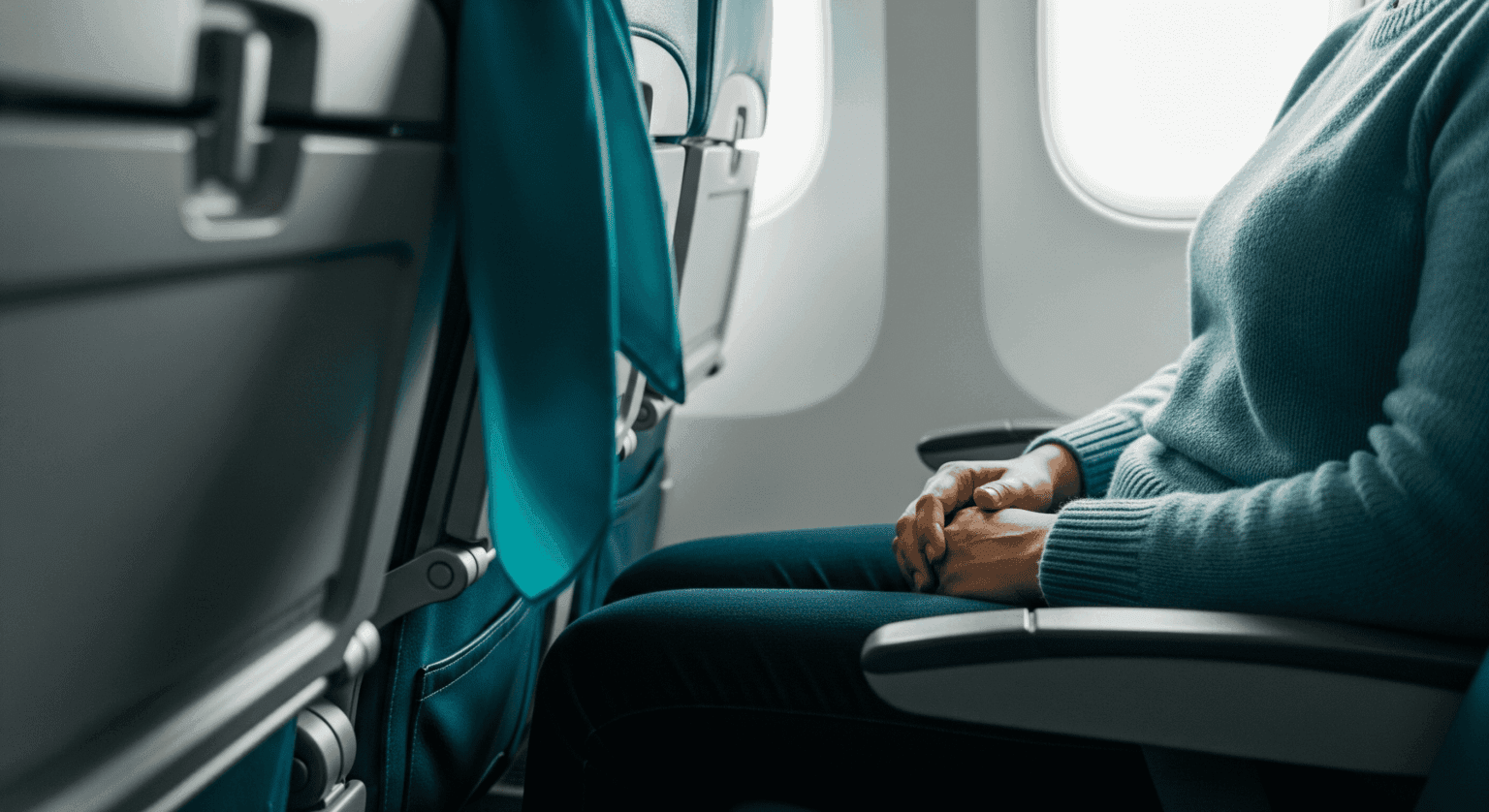
The fasten seatbelt sign dings. The plane dips slightly. You grip the armrest tighter, brace yourself, and wonder just how bad it’s going to get.
Anxiety about turbulence is one of the most common reasons passengers dread flying — even those who fly often. While turbulence is a normal part of air travel, the experience of it can feel anything but. For many, it triggers discomfort, helplessness, or the urge to mentally escape the cabin.
What makes turbulence challenging isn’t the physical motion — it’s the emotional response to uncertainty and lack of control. That’s why more travelers are turning to hypnosis to stay calm, focused, and grounded in the air.
Rather than “toughing it out,” hypnosis helps passengers change how their brain and body react to turbulence — naturally and without medication.
Jump To:
TLDR – Quick Guide
- What this is about: Using hypnosis to ease fear and discomfort during flight turbulence
- How it helps: By calming the nervous system, reframing perception, and training the mind to respond with confidence
- Who it’s for: Any flyer who tenses up, spirals mentally, or feels uneasy when the cabin shakes
- Why it works: Hypnosis targets the subconscious patterns that trigger emotional discomfort
Want to explore this further? Fear of Flying Hypnosis and Stress Reduction Hypnotherapy at Silicon Valley Hypnosis Center are designed to support exactly this kind of transformation.

Why Turbulence Feels Worse Than It Is
Commercial pilots, flight crews, and seasoned travelers know turbulence is routine — a normal part of flying caused by air currents. It’s not dangerous. Yet for many passengers, turbulence feels like something is going wrong.
This disconnect between what we know and what we feel is at the heart of anxiety about turbulence.
The Role of Perception in Turbulence Anxiety
When a plane jolts, our minds often jump to worst-case thinking. Even if we’ve heard the safety stats a hundred times, that shaky moment can cause discomfort and emotional overwhelm. Hypnosis helps shift these automatic responses — not by suppressing fear, but by changing how you interpret what’s happening – automatically.
Through targeted sessions, a hypnotherapist helps you retrain your subconscious to experience turbulence as manageable, routine, and safe — not as a threat. This approach supports the kind of internal safety passengers need when things get bumpy.
How Hypnosis Creates Calm in the Face of Cabin Movement
Reframing Your Brain’s Response Mid-Flight
Hypnosis works by guiding you into a focused, relaxed mental state where your brain becomes more open to new suggestions. In that state, the hypnotherapist can help:
- Dissolve old fear-based associations with turbulence
- Introduce calm, grounding mental imagery
- Reinforce internal beliefs like “I am safe” or “This will pass”
Over time, your nervous system begins to respond to turbulence with more neutrality instead of alarm.
This technique aligns with the therapeutic goals of Hypnotherapy for Anxiety, which focuses on quieting the mind and creating new emotional patterns.
Helping the Body Stay Physically Calm
Turbulence doesn’t just stir up thoughts — it can trigger a full-body stress response. Even without realizing it, passengers may clench muscles, hold their breath, or become hyperaware of every motion.
Hypnosis helps train the body to stay physically relaxed, even when external conditions change. Clients often learn techniques such as:
- Breath pacing for rhythm and regulation
- Mental focus anchors to stay present in the moment
- Visualization of ease during turbulencel
These calming tools are often introduced in Stress Reduction Hypnotherapy, giving clients strategies they can apply mid-flight.
Addressing Deeper Fears That Surface During Turbulence
For some passengers, turbulence doesn’t just cause unease — it opens the door to deeper fears, like thoughts of catastrophe or crashing. This fear is more than surface-level discomfort; it reflects existential anxiety triggered by feeling out of control in a high-stakes environment.
While hypnosis doesn’t replace therapy or psychiatry, it can help passengers gently reframe these intense thoughts. By introducing new emotional scripts, hypnosis helps rewire the mind to process turbulence without spiraling.
For clients whose flying fear centers around loss of control or catastrophic thinking, Fear of Death While Flying hypnosis can be a powerful support service.
Building Internal Trust and Resilience at 35,000 Feet
Passengers often say, “I just don’t trust myself to stay calm once the turbulence starts.” That’s where hypnosis goes beyond symptom relief — it builds internal trust and self-regulation.
Through repeated sessions, passengers learn to:
- Reframe fear as something they can influence
- Replace helplessness with calm confidence
- Create a new personal narrative: “I fly well, even during turbulence”
This shift is supported through techniques also used in Self-Confidence Hypnosis and Mental Focus Hypnotherapy at Silicon Valley Hypnosis Center.
What a Session Focused on Turbulence Looks Like
A typical hypnosis session for turbulence-related anxiety might include:
- Initial consultation to explore flight history and specific turbulence concerns
- Relaxation induction to create a calm, receptive mental state
- Visualization of smooth flights and turbulence as tolerable
- Post-session reinforcement tools like recordings or self-hypnosis tips
Sessions are available both in-person and online, making it easy to start no matter where you’re located.
Key Takeaways
- Anxiety about turbulence is a common but manageable part of flying.
- Hypnosis helps retrain your response to turbulence so it feels less threatening and more tolerable.
- Clients report greater calm, better self-regulation, and more trust in their ability to fly.
- Services like Fear of Flying Hypnosis, Anxiety Hypnotherapy, and Self-Confidence Hypnosis are designed to support these goals.
FAQs About Hypnosis and Turbulence Anxiety
Can hypnosis stop me from reacting to turbulence?
It can help you change how you respond. Instead of reacting with fear, hypnosis helps create internal patterns of calm that carry through even when the cabin shakes.
Do I need to relive past flight anxiety for hypnosis to work?
No. Hypnosis works with the subconscious to build new associations. It doesn’t require revisiting old fears or distressing experiences.
What if I’ve never had a panic attack, just discomfort?
That’s perfectly fine — hypnosis isn’t about treating clinical issues. It’s about helping you feel more emotionally at ease when flying, especially during turbulence.
Will I be unconscious or lose control during a session?
No. You remain aware and in control. Hypnosis is a focused, relaxed state — not sleep or unconsciousness.
How many sessions do people typically need?
Some clients feel more confident after a few sessions. Others benefit from more sessions to build deeper reinforcement before a big trip.
Disclaimer
While hypnosis has many scientifically documented beneficial effects, it is not a substitute for medical, psychological, or psychiatric treatment. We are not licensed mental health practitioners, and do not claim to diagnose, treat, cure, or prevent any disease or illness. Please seek care from a licensed mental health professional or medical doctor for these purposes. This article is for informational purposes only and is not meant to provide medical or mental health advice. All terms are used as common vernacular rather than diagnostic language.