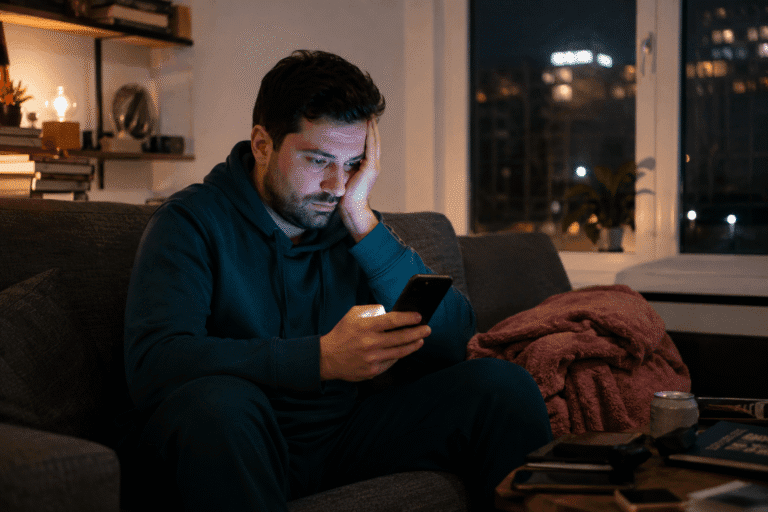

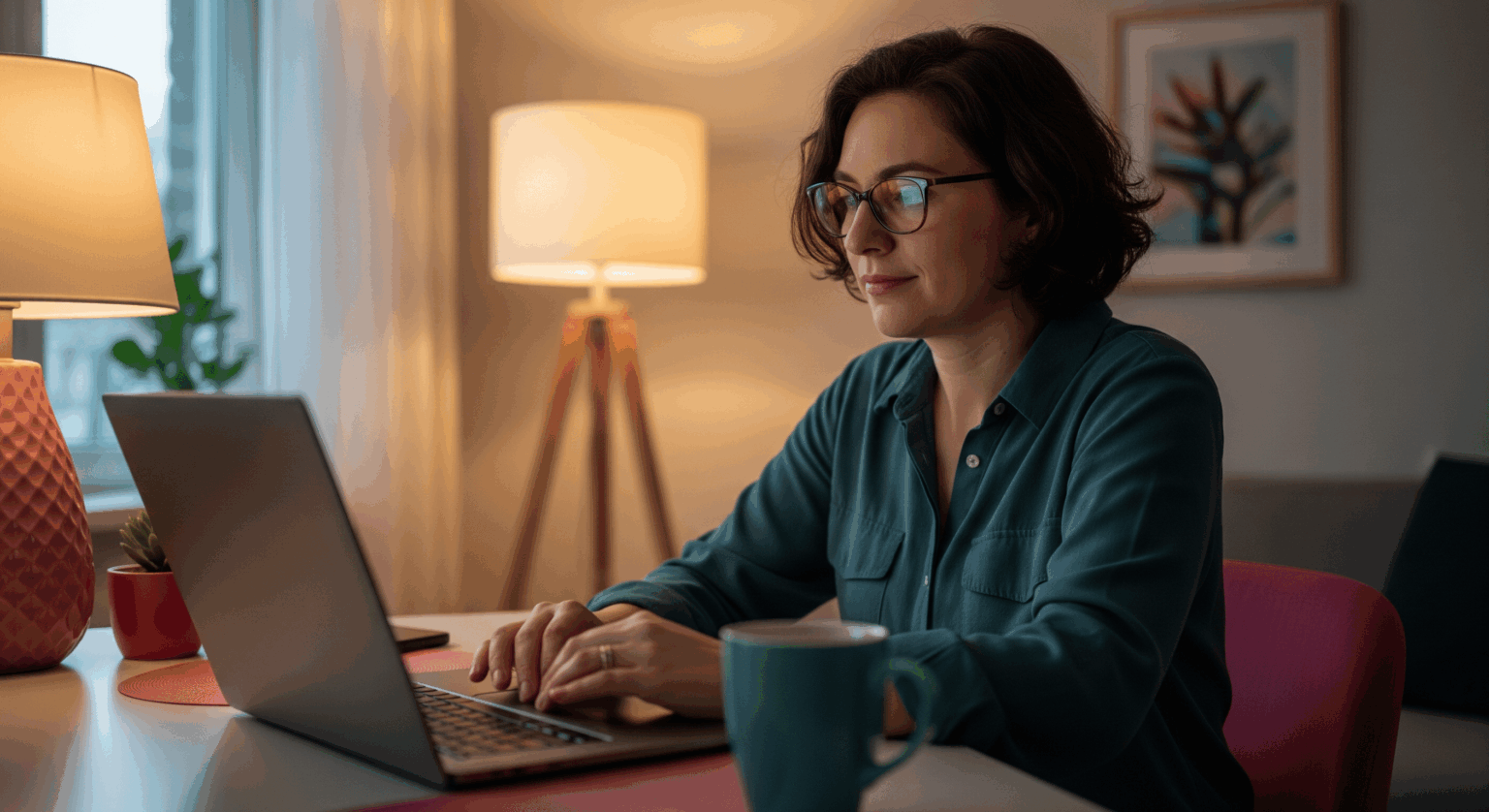
Modern lifestyles are demanding: deadlines, screens, constant connectivity, and shifting responsibilities can leave your mind in go mode long after the day is over. That internal chatter — planning tomorrow, rehashing the day, worrying about tasks — often crashes into your evening routine and makes wind‑down feel elusive.
That’s where online hypnotherapy sessions become a supportive tool for nighttime calm. Rather than applying band‑aid solutions like distraction or temporary relaxation techniques, hypnosis accesses deeper internal patterns that fuel tension and mental agitation, helping you replace them with relaxing, grounded states that make a real difference at night.
Online hypnosis makes this support accessible from the comfort of home — so your evening walk, bath, or quiet tea becomes part of a holistic relaxation rhythm rather than a frantic attempt to shut the day off.
Let’s explore how it works.
Jump to:
TLDR – Quick Guide
- Topic: How online hypnotherapy sessions support calming the mind and body at night.
- Why it matters: Busy days leave many of us mentally wired at bedtime, making relaxation and winding down difficult.
- How it helps: Hypnosis assists in reducing mental noise, unwinding tension, and reinforcing calming internal patterns — all in a convenient virtual format.
- Who it’s for: Anyone struggling with evening stress, racing thoughts after dark, or difficulty transitioning into rest.
The blog features core services like Virtual Hypnotherapy Sessions, Hypnotherapy for Better Sleep, and Stress Reduction Hypnotherapy from Silicon Valley Hypnosis Center.

Why Evening Wind‑Down Matters
The Psychology of Nighttime Overwhelm
When your brain doesn’t have a way to slow down, the body can’t either. Evening overwhelm doesn’t just feel like “thinking too much” — it leads to:
- Muscle tension from residual stress
- Difficulty transitioning from activity to rest
- Internal restlessness and distracted thoughts
- Harder time accessing calm or peaceful focus
Your nervous system — the internal regulator of calm vs. arousal — needs intentional signals to shift into a state of relaxation. Evening routines help habituate that shift. But for many, routines alone aren’t enough: the subconscious mind stays activated long after conscious awareness tries to relax.
That’s where hypnosis helps — by targeting the internal triggers that keep your system active, not just the surface thoughts.
How Online Hypnotherapy Sessions Help You Wind Down
1. Creating a Calm Mental Transition
One of the biggest challenges in evening routines is the transition phase: moving from doing to being. Hypnosis meets you in that transitional moment:
- It helps your mind leave behind daily tasks
- Reduces internal mental chatter
- Guides you into a state of calm, receptive awareness
This isn’t just about relaxation — it’s about rewiring how your mind initiates calm at night. Through Virtual Hypnotherapy Sessions, you work with a hypnotherapist directly — in real time — to create personalized relaxation patterns that your mind can access again and again.
Rather than putting your day “on pause,” hypnosis helps your internal system shift gears smoothly from activity to rest.
2. Soothing Emotional Tension from the Day
Emotional residue — stress, frustration, unprocessed thoughts — doesn’t just disappear when the sun goes down. Many evenings feel like the mind’s “overflow hour,” where unaddressed tension finally surfaces.
Hypnosis helps by:
- Providing internal cues for calm that diffuse stored tension
- Redirecting emotional energy into peaceful focus
- Helping you disengage from ruminative thinking
When you work with hypnotherapy geared toward calm and relaxation, the body can follow. This internal calming process is deeply supportive of services like Hypnotherapy for Better Sleep — where the goal is not just sleep pressure but mental serenity.
3. Reducing Stress Patterns that Interrupt Rest
Stress patterns — things like “I have to check my email one last time,” “I forgot to do X,” or “I need to remember tomorrow’s to‑dos” — can keep your mind keyed up even hours after the stressor has passed.
Online hypnotherapy helps by:
- Interrupting the internal stress loops that replay at night
- Reinforcing cues that signal “the day is complete”
- Helping the nervous system decode evening as a time for calm, not vigilance
This internal shift is central to services like Stress Reduction Hypnotherapy, where reducing the internal stress response becomes part of your daily rhythm.
4. Building Consistent Wind‑Down Habits
A key advantage of online hypnotherapy sessions is how easily they fit into your routine. Because they’re virtual, you can:
- Schedule sessions at your ideal wind‑down time
- Create consistent relaxation cues in your own environment
- Use guided recordings between live sessions for reinforcement
Consistency is critical: the more your mind experiences calm as a predictable part of night, the easier it becomes to access that state without effort.
Hypnosis makes calm become habitual, not just occasional.
Practical Evening Calm Strategies (Reinforced by Hypnosis)
These practices — when paired with the internal work of hypnosis — help deepen the impact of your evening routine:
Start with Awareness
✔ Notice when your thoughts shift from task‑oriented to worry‑oriented
✔ Take a purposeful breath before beginning your wind‑down
Prepare the Environment
✔ Lower lights or screen brightness
✔ Choose a no‑distraction space for your session
✔ Set intention: “I am moving into calm”
Integrate Calm Cues
✔ Use internal anchors (e.g., a phrase like “I let go now”)
✔ Notice bodily sensations easing
✔ Visualize your day closing and inner calm opening
Reinforcement Between Sessions
✔ Use recordings or self‑hypnosis scripts learned in online sessions
✔ Practice the calm cues consistently
✔ Acknowledge even small relaxation winsEach of these habits becomes stronger when paired with the deeper internal shifts enabled by hypnosis — because your subconscious starts to expect calm at night, not just react to it.
Key Takeaways
- Online hypnotherapy sessions create deeper evening calm by addressing the internal patterns that interfere with winding down.
- They help transition your mind from day mode into restful awareness with less tension and fewer racing thoughts.
- This type of support builds consistent, sustainable calm at night — not just temporary relaxation.
- Services like Virtual Hypnotherapy Sessions, Hypnotherapy for Better Sleep, and Stress Reduction Hypnotherapy offer structured pathways to internal calm and nighttime ease.
- When you combine internal work with a mindful evening routine, your mind learns to anticipate rest — making relaxation, peace, and sleep more attainable.
FAQs: Online Hypnotherapy Sessions and Evening Calm
1. Can hypnotherapy really help with stress at night?
Yes — by accessing the internal patterns that fuel mental tension and helping you replace them with calm, intentional responses.
2. Do I lose control during hypnotherapy sessions?
No — you’re fully present and in control. Hypnosis is a focused state of awareness that helps your mind choose calm more easily.
3. How quickly will I feel a difference?
Some people feel more relaxed even after one session. More lasting evening calm usually develops over a series of sessions combined with consistent practice.
4. Do I need to be in a certain place to do online hypnotherapy?
No — all you need is a quiet, safe space where you can focus without interruption during your virtual session.
5. Is hypnosis a replacement for good habits like sleep hygiene?
No — it is complementary. Hypnosis enhances internal calm so habits like bedtime routines, screens‑off time, and intentional breathing work more effectively.
Disclaimer
While hypnosis has many beneficial effects, it is not a substitute for medical, psychological, or psychiatric treatment. We are not licensed mental health practitioners and do not claim to diagnose, treat, cure, or prevent any disease or illness. Please seek care from a licensed mental health professional or medical doctor for these purposes. This article is for informational purposes only and is not meant to provide medical or mental health advice. All terms are used as common vernacular rather than diagnostic language.