

Trading is a world of constant movement and shifting stakes. Markets rise and fall in seconds, and every decision carries consequence. It’s one thing to understand the mechanics of trading—but succeeding is just as much about staying centered when things get heated.
That’s why an increasing number of financial professionals are embracing an increasingly respected and results-driven tool: traders turn to hypnosis as a performance amplifier, not a last-resort coping mechanism.
At the Silicon Valley Hypnosis Center, we support traders in transforming stress into composure, clarifying cluttered decision-making, and building unwavering focus. This blog dives into why hypnosis is one of the most effective ways to manage emotional pressure in trading—and how it can help you trade smarter, not harder.
Jump To:
TLDR – Quick Guide
In a nutshell:
- Market stress isn’t just emotional—it’s an execution barrier.
- Traditional stress tools often fall short under pressure.
- Hypnosis delivers deeper, more sustainable mental resilience.
- Many top traders incorporate hypnosis for performance clarity—not for therapy.
In this post, you’ll learn:
- How stress impacts trading decisions
- Why tools like breathing exercises can only take you so far
- What hypnosis brings to the table—without needing extra effort
- Practical ways hypnosis supports mental clarity during trading
- FAQs about balancing hypnosis with a professional trading routine
Whether you’re dealing with sudden 10% swings or building a disciplined daily routine, this article is for professionals who want sharper, steadier performance under pressure.

Detailed Breakdown
Why Stress Can Derail Even the Best Traders
In the fast-paced world of trading, stress isn’t a vague feeling—it’s a force that reshapes your behavior in real time. It doesn’t just hover in the background; it shows up in how you click, hesitate, react, or overcorrect. And unlike market volatility, which you can’t control, stress is something you can learn to manage more effectively—with the right tools.
Let’s break it down.
Stress can:
- Trigger impulsive trades in fear-driven moments
Even seasoned traders can find themselves entering or exiting positions based not on strategy, but on a split-second emotional jolt. The impulse to “make back a loss” or “lock in a win” can override the logical framework you’ve built.
- Flatten your focus on setup rules and risk management
Stress narrows your vision. Instead of scanning the big picture—risk/reward ratios, trade confirmation, broader market context—you become tunnel-focused on the immediate pain or urgency.
- Drain mental energy, making strategy drift into mistake zones
Mental fatigue builds quickly when every decision feels high-stakes. Over time, that weariness leads to overlooking key indicators, abandoning risk parameters, or skipping analysis altogether.
- Turn winning strategies into reactive firefights
When stress hijacks your decision-making, even a well-crafted strategy can feel like guesswork. You’re not trading the plan—you’re reacting to discomfort. The edge you worked so hard to create gets diluted.
The reality? Many traders spend years refining their charts, backtests, and setups. But if emotional stress runs unchecked, all of that precision can slip through the cracks in a moment of pressure.
That’s why managing internal patterns—how you respond to challenge, uncertainty, and loss—is just as critical as recognizing external ones. Because at the end of the day, it’s not just about what you trade. It’s about how you show up to the trade.
Traditional Coping Tools: Helpful but Superficial
For stock traders seeking performance under pressure, traditional mindset tools like mindful breathing, journaling, or positive affirmations have become standard advice. And to be clear—they’re not without merit. These methods can absolutely foster self-awareness, regulate tension in the moment, and bring attention back to the process.
But they also share a common limitation: they rely heavily on your conscious awareness.
And that’s exactly where things begin to break down when market pressure spikes.
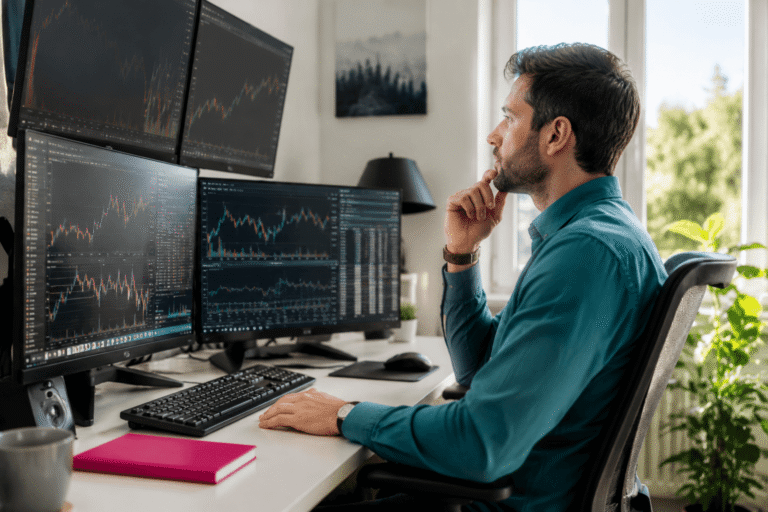
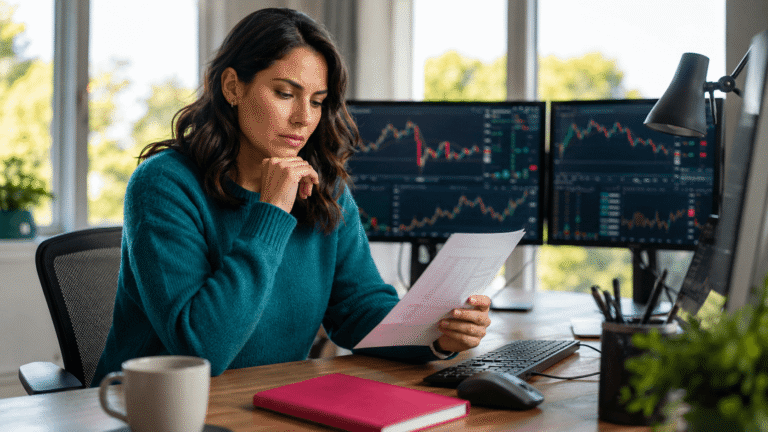
When you’re staring at multiple monitors, watching charts move in real time, and calculating risk on the fly—there’s little room to pause and remind yourself to breathe deeply or write about your emotions. In high-stakes moments, the conscious mind becomes overwhelmed. Focus narrows. Emotional responses speed up. And suddenly, the stress-reduction tools that require deliberate effort feel out of reach.
It’s not that breathing exercises or journaling are ineffective. It’s that they’re reactive by design—tools you reach for after the stress kicks in.
Trading, on the other hand, demands real-time clarity. Not calmness that’s manually recalled, but composure that’s built in. This is why so many professionals look beyond surface strategies and turn to deeper methods like hypnosis—tools that engage the subconscious, where behavioral patterns and reactions are actually stored.
Because when staying calm under pressure isn’t something you have to “try” to do—it simply happens—your edge becomes consistent.
Hypnosis: The Efficient Stress Antidote
Hypnosis offers a fundamentally different approach to managing stress—it’s not about adding more tools to your routine, but transforming how your mind responds at its foundation. Here’s how it achieves this:
1. Seamless Integration into the Mind
You don’t need to set aside time for scripting affirmations, tracking journal entries, or remembering breathing exercises throughout your trading day. With hypnosis, calm clarity isn’t summoned—it becomes activated. The shifts are embedded during sessions but unfold naturally, especially when the pressure is highest.
2. Rewrites the Default Response
Many techniques merely advise you to override a reaction—take a breath, pause, remind yourself. Hypnosis goes deeper. It shifts the internal code. Composure isn’t something you strive for—it becomes your default mode. When market noise rises, you’re already centered, not scrambling to regain balance.
3. Sustained Mental Presence Under Fire
Instead of toggling mentally between “calm” and “stressed,” hypnosis builds what we call a performing presence: a steady, grounded state from which you observe, not react. You remain mentally anchored—even when rapid market moves call for split-second decisions.
4. Lasting Momentum with Minimal Maintenance
You won’t need “micro-tricks” to cope during a trade. After a few focused hypnosis sessions, many clients experience shifts that persist—less chatter, fewer emotional triggers, more consistent execution. It’s efficient, not exhausting.
In essence, traders turn to hypnosis not because there’s something to fix, but to access a form of mental consistency that naturally supports performance. It’s not about coping with stress—it’s about performing through it with clarity, focus, and composure.
Key Takeaways
Trading stress is a performance barrier, not merely an emotional challenge. While many rely on practiced tools under pressure, hypnosis offers a more lasting shift—making confidence and clarity your baseline, not your aspiration.
- Stress can erode even the sharpest instincts in trading.
- Conscious coping tools require mental energy that stress often steals.
- Hypnosis rewires your internal response to pressure—making clarity natural.
- Practiced traders integrate hypnosis as a performance accessory—not a fix.
Trading isn’t just about reacting; it’s about responding intentionally. When traders turn to hypnosis, they trade with centered clarity, not reactive urgency. That shift can be the difference between consistently following their strategy and being at the mercy of the market’s chaos.
FAQs
Do I have to believe in hypnosis for it to work?
No. All you need is focus and openness to guidance. Hypnosis works through repetition of new thought patterns, not persuasion or belief systems.
Can I fit hypnosis into an already demanding trading schedule?
Yes. Sessions are typically 1 hour, and many clients report feeling results in the weeks that follow. Plus, it reduces burnout, offering mental recovery beyond the session.
Is hypnosis a one-size-fits-all solution?
Not at all. It’s targeted. We focus on actual trading pressure points—like hesitation, streak remorse, or overload—so mental gains are tailored and relevant.
Will hypnosis change my trading strategy?
No, but it will enhance your execution. The goal isn’t revising strategy—it’s operating your existing strategy with clearer, calmer consistency.
Can hypnosis help with pre-trade routine anxiety or emotional attachment to outcomes?
Yes. Hypnosis helps decouple trade from emotion—so pre-trade nerves stay aligned to logic and clarity, and outcomes don’t derail mental steadiness.
Disclaimer
While hypnosis has many scientifically documented beneficial effects, it is not a substitute for medical, psychological, or psychiatric treatment. We are not licensed mental health practitioners, and do not claim to diagnose, treat, cure, or prevent any disease or illness. Please seek care from a licensed mental health professional or medical doctor for these purposes. This article is for informational purposes only and is not meant to provide medical or mental health advice. All terms are used as common vernacular rather than diagnostic language.