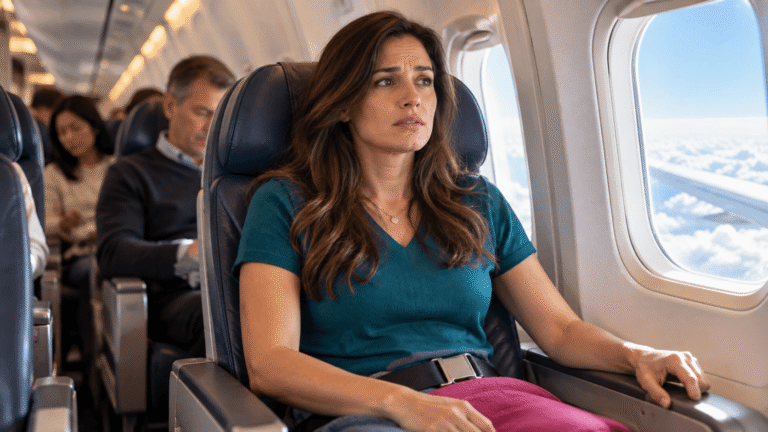


You may be looking forward to your vacation, seeing family, or arriving somewhere you’ve wanted to visit for years. But instead of thinking about the destination, your mind keeps returning to the flight. This is one reason people explore hypnosis for flight anxiety before an upcoming trip.
Here’s something I think is important.
You may already know:
- worrying about the flight isn’t helping you
- you may have flown before
- you understand that you want to feel differently
- you might have even told yourself many times, “I know I’ll be okay.”
So why doesn’t knowing that always change the response?
Because understanding something consciously doesn’t necessarily change what your subconscious mind has learned.
At Silicon Valley Hypnosis Center, I don’t want to spend all of our time helping you become more aware of a pattern you already recognize.
I want to find out:
- what may be keeping that pattern going
- what may be happening underneath it
- how we can work on changing it
That may involve:
- an unwanted emotional connection with a past negative experience
- a subconscious limiting belief about flying, control, or uncertainty
- a conflict between what your conscious mind wants and what your subconscious mind has learned to do
The important question becomes:
What would need to change for you to experience flying differently?
That’s where I want the work to go.
TLDR Quick Guide to Flight Confidence
People usually don’t explore hypnosis for flight anxiety because they need someone to tell them they shouldn’t worry.
They probably already know that.
The problem is that:
- consciously wanting to feel comfortable
- actually changing an automatic response
are two different things.
Think about learning to ride a bicycle.
At first:
- you consciously think about almost everything you’re doing
Eventually:
- much of it becomes automatic
Your mind can learn unwanted patterns in much the same way.
Thoughts, expectations, beliefs, and emotional connections can become so familiar that the response seems to happen automatically.
Hypnotherapy can provide a way to work with those deeper patterns.
Rather than only asking:
“How do I get through the flight?”
I want to ask:
“What’s keeping this response going, and what would you like to experience instead?”
The Flight May Be Next Month, but Your Mind Is Already on the Plane
Have you ever noticed how easily your mind can travel into the future?
Your flight may be weeks away, but you’re already thinking about:
- boarding
- takeoff
- turbulence
- how you’re going to feel
You’re physically sitting at home, but mentally you’ve already taken the trip several times.
That’s useful information.
It tells us that the unwanted pattern may not begin when the airplane leaves the ground.
It can begin with:
- what you think about the flight beforehand
- what you imagine could happen
- what your mind expects the experience to feel like
Your mind is very good at imagining things that haven’t happened yet.
That’s useful when you’re:
- planning a trip
- preparing for a meeting
- deciding what to do tomorrow
But there’s a difference between planning and repeatedly imagining an outcome you don’t want.
If every thought about flying leads to another thought about what could go wrong, your mind gets plenty of practice following that path.
Our hypnotherapy for fear of flying can focus on the pattern around flying, including what happens before you ever reach the airport.
I don’t want you to become better at worrying about the flight.
I want to understand why your mind keeps going there in the first place.
You May Already Know That Flying Is Common
People sometimes try to change an unwanted response by giving themselves more information.
They may:
- read about airplanes
- learn about turbulence
- remind themselves how many flights they’ve already completed
There is nothing wrong with information.
But here’s the question I would ask:
Has knowing those facts changed the response?
If it has, great.
If it hasn’t, perhaps the problem isn’t a lack of information.
Your conscious mind may already understand that you want to fly comfortably.
But your subconscious mind may have learned something different about flying.
This distinction is important to understanding how hypnotherapy works.
Suppose I tell you:
- “You shouldn’t worry about this.”
You might say:
- “I know.”
Then I explain why you shouldn’t worry.
You say:
- “I know that too.”
At some point, giving you more information you already understand isn’t moving us forward.
So I want to go underneath the conscious understanding.
What has your mind learned that keeps producing the old response?
That’s a much more useful question.
Your Mind Learns Connections
Your mind is constantly connecting things.
For example:
- you hear an old song and remember where you were when you first heard it
- you smell a particular food and suddenly think about your childhood
- you drive past a familiar building and remember something that happened there years ago
Nobody had to tell you to make those connections.
Your mind learned them.
The same thing can happen with flying.
The following can become connected with an unwanted response:
- an airplane
- an airport
- takeoff
- turbulence
- even the thought of an upcoming trip
After enough repetition, that connection can begin to feel automatic.
You don’t consciously decide:
“I’m going to start worrying about the flight now.”
It just seems to happen.
This is one reason hypnosis and fear of flying can involve more than teaching someone what to do once they’re sitting on the airplane.
Managing the moment may be useful.
But if the same pattern keeps returning, I want to know what’s underneath it.
Ask:
- What connection has your mind made?
- Is that connection still useful today?
If it isn’t, that’s something we can work on changing.
A Past Flight Doesn’t Have to Decide How You Experience the Next One
Sometimes a person can point to a past negative flying experience.
Maybe:
- one flight felt especially uncomfortable
- there was unexpected turbulence
- something else happened that became strongly connected with flying
Does that mean everyone who wants to change their response to flying has some hidden experience from the past?
No.
I wouldn’t assume that.
But when an earlier experience is relevant, I want to know whether an unwanted emotional connection with that experience is still influencing the person today.
Imagine touching a hot stove.
Your mind learns very quickly.
That’s useful because you don’t want to keep touching hot stoves.
But sometimes the mind can make a connection that becomes broader than it needs to be.
With hypnosis for flight anxiety, part of the deeper work may involve:
- changing an unwanted emotional connection
- neutralizing an unwanted emotional connection with an earlier negative experience
We’re not trying to erase what happened.
We’re also not trying to use hypnotherapy to prove that every detail of a memory is accurate.
Memory isn’t a perfect recording.
What matters is what your mind learned from the experience.
The flight may have ended years ago.
You don’t necessarily need to keep taking the old response with you every time you travel.
What Do You Believe About Flying?
Beliefs are important because they can influence how we interpret an experience.
Suppose one person thinks:
“I don’t have to control everything to be okay.”
Another person thinks:
“If I’m not in control, something could go wrong.”
Now put both people on the same airplane.
They may experience exactly the same flight very differently.
That’s why I want to know more than what happens when you fly.
I also want to know what you believe about what happens.
Maybe there’s a belief about:
- control
- uncertainty
- your ability to handle the experience
I’m not going to assume what it is.
We find out what’s relevant to you.
Our work around fear and personal limitations can involve identifying subconscious limiting beliefs that may be influencing the pattern a person wants to change.
Here’s a simple way to think about it.
Imagine driving with:
- one foot on the gas
- one foot on the brake
Your conscious mind says:
“I want to enjoy this trip.”
A subconscious belief says:
“I need to stay worried so I’ll be prepared.”
You can press the gas harder.
Or you can find out why the brake is still on.
I prefer the second approach.
What If Part of You Wants to Fly and Another Part Doesn’t?
This is something I find very interesting.
A person can want two different things at the same time.
Your conscious mind may be thinking:
- “I want to visit my family.”
- “I want to take this vacation.”
- “I want to travel for work.”
- “I want flying to become easier for me.”
Those are clear goals.
But another part of your mind may have learned that:
- avoiding flying
- staying alert
- worrying
protects you in some way.
Now the two parts aren’t working together.
Think of it like two people trying to steer the same car.
- One wants to turn left.
- The other keeps pulling right.
Driving faster isn’t going to solve the disagreement.
They need to get on the same page.
This is one reason conscious effort alone can sometimes be frustrating.
You may be trying very hard to change something while another part of your mind continues running the old pattern.
Hypnotherapy can provide a way to explore that conflict.
Instead of fighting the subconscious mind, I want to understand:
- what it’s trying to accomplish
- why it may still be using the old response
- whether there’s a more useful way to accomplish that goal
Then we can work toward a more useful way of accomplishing that goal.
Why I Want to Go Deeper Than Managing the Flight
There are plenty of things someone can do to make a flight more comfortable.
You can:
- listen to music
- watch a movie
- talk with someone
- choose a particular seat
- redirect your attention
If those things help, wonderful.
But suppose you have to keep managing the same unwanted response every time you travel.
At that point, I think it’s worth asking:
Why does the pattern keep coming back?
This is where hypnosis for flight anxiety can go deeper.
When appropriate, I want to work with what may be helping create or maintain the unwanted response.
That can include three important areas:
- Past negative experiences: If an earlier experience still has an unwanted emotional connection, we may work on changing that connection so it doesn’t carry the same influence into future flights.
- Subconscious limiting beliefs: If your mind has learned a belief about control, uncertainty, flying, or your own ability to handle the experience, we can identify that belief and work toward changing it.
- Conflicts between the conscious and subconscious mind: If you consciously want to travel comfortably while another part of your mind believes it needs to worry or stay on alert, we can work on getting those parts moving toward the same goal.
This deeper approach is also part of how hypnotherapy can support travelers who feel nervous about flying.
The point isn’t to promise that you’ll:
- never notice turbulence
- never have another uncomfortable thought
That’s not a realistic goal.
The goal is to work on the pattern that has been getting in your way.
What Do You Want Instead?
This may sound like a simple question.
But I think it’s one of the most important questions we can ask.
People usually begin by telling me what they don’t want:
- “I don’t want to worry about the flight.”
- “I don’t want to think about everything that could go wrong.”
- “I don’t want to spend the week before my vacation thinking about the airplane.”
Okay.
I understand what you don’t want.
What do you want?
Maybe you want to:
- think about the destination instead of the flight
- sit in your seat and focus on what is actually happening rather than what your imagination says could happen
- trust yourself to handle the experience
- simply let flying become a way of getting from one place to another
Now we’re getting somewhere.
If all we know is what you’re trying to move away from, we don’t have a destination.
Once we know what you want instead, we can begin working toward it.
That’s a very different approach from spending all of our time talking about the problem.
Why Work on the Pattern Before Your Next Trip?
If you already know an upcoming flight tends to bring up an unwanted response, why wait until you’re sitting at the gate to do something about it?
The time before your trip gives you an opportunity to work on the pattern itself.
You can:
- identify what you want to change
- explore what your mind may have learned about flying
- look at whether a limiting belief is relevant
- look at whether a past negative experience is relevant
- explore whether a subconscious conflict is relevant
- become clear about what you want instead
This doesn’t mean hypnotherapy guarantees that a future flight will feel a certain way.
People are different, and I don’t believe in promising a specific result.
But there’s an important difference between:
- waiting for the same old response to appear
- actively working on what may be creating it
That’s why some people explore hypnotherapy before their next trip.
They aren’t only preparing their luggage.
They’re working on how they want to experience the journey.
From Getting Through the Flight to Changing the Pattern
Maybe your original goal was:
“I just want to get through the flight.”
I understand.
But I invite you to consider something more useful.
What if the goal wasn’t simply getting through another flight?
What if you could work on the pattern that has been making flying so difficult for you?
At Silicon Valley Hypnosis Center, that’s where we want the work to go.
We may explore:
- subconscious limiting beliefs
- an unwanted emotional connection to a past negative experience
- whether your conscious and subconscious mind have been working toward different goals
The exact pattern depends on the person.
That’s why I don’t want to assume that everybody who feels uncomfortable about flying needs exactly the same thing.
Hypnotherapy also isn’t a replacement for appropriate medical or mental health care when that care is needed, and we don’t promise a particular result.
What we can do is:
- focus on the change you want to make
- explore what may have been getting in the way
If you’d like to talk about what you want to experience differently before your next trip, you can book a call with Dan Ross to discuss your goals and whether hypnotherapy may be appropriate for you.
You probably already know what you don’t want.
Now let’s get clear about what you want instead.
Key Takeaways
People often explore hypnosis for flight anxiety because consciously knowing they want to feel differently hasn’t been enough to change the old pattern. Rather than staying at the level of awareness, hypnotherapy can explore what may be happening underneath and work toward the response the person actually wants.
- An unwanted response to flying can begin long before the flight itself.
- Knowing facts about flying doesn’t necessarily change what your subconscious mind has learned.
- Your mind naturally creates associations, and some of those associations can become unhelpful.
- A past negative flying experience may sometimes carry an unwanted emotional connection into future trips.
- Subconscious limiting beliefs about control, uncertainty, or your own ability may influence how you experience flying.
- Your conscious mind and subconscious mind can sometimes be working toward different goals.
- Deeper hypnotherapy work may focus on past emotional connections, limiting beliefs, and subconscious conflicts.
- The goal isn’t simply to understand why the pattern happens. The goal is to work toward changing what may be keeping it in place.
- Knowing what you want instead gives the work a useful direction.
So here’s the question I invite you to consider before your next trip:
If you weren’t spending so much time thinking about the flight, what would you rather be thinking about?
Maybe that’s the destination.
And that’s a pretty good place to start.
Frequently Asked Questions
How does hypnosis for flight anxiety work?
Hypnosis for flight anxiety can use focused attention to work with:
- subconscious beliefs
- learned associations
- patterns connected with flying
Depending on the individual, that may include:
- working with a limiting belief
- working with an unwanted emotional connection to a past experience
- addressing a conflict between conscious goals and subconscious responses
The goal is to help develop a more useful pattern rather than promise a particular result.
Why can I understand that flying is common and still feel uncomfortable?
Conscious understanding and subconscious learning aren’t necessarily the same thing.
You may:
- logically understand what you want
- still have an old belief or learned association producing a different response
Rather than simply giving you more information, hypnotherapy can explore what may be keeping that deeper pattern in place.
Can hypnotherapy help if an earlier flight still affects how I feel about flying?
If a past negative experience still has an unwanted emotional connection, hypnotherapy may be used to work with:
- the meaning connected with that experience
- the response connected with that experience
We’re not trying to:
- erase the past
- establish every detail of a memory as fact
The focus is on whether that earlier experience is influencing you today and what you would like to experience differently.
When should I explore hypnotherapy before an upcoming flight?
There isn’t one schedule that is right for everyone.
Beginning before the trip can provide time to:
- identify your goals
- explore beliefs that may be relevant
- explore learned associations
- explore internal conflicts connected with the pattern you want to change
The number and timing of sessions can depend on:
- the individual
- the work involved
Will hypnosis for flight anxiety guarantee that I feel calm when I fly?
No.
Hypnotherapy shouldn’t be presented as a guarantee that you’ll:
- feel a particular way during every future flight
- have a perfect flight
It can support work on subconscious patterns that may be interfering with the experience you want, with the focus on meaningful personal change rather than promising a particular outcome.