

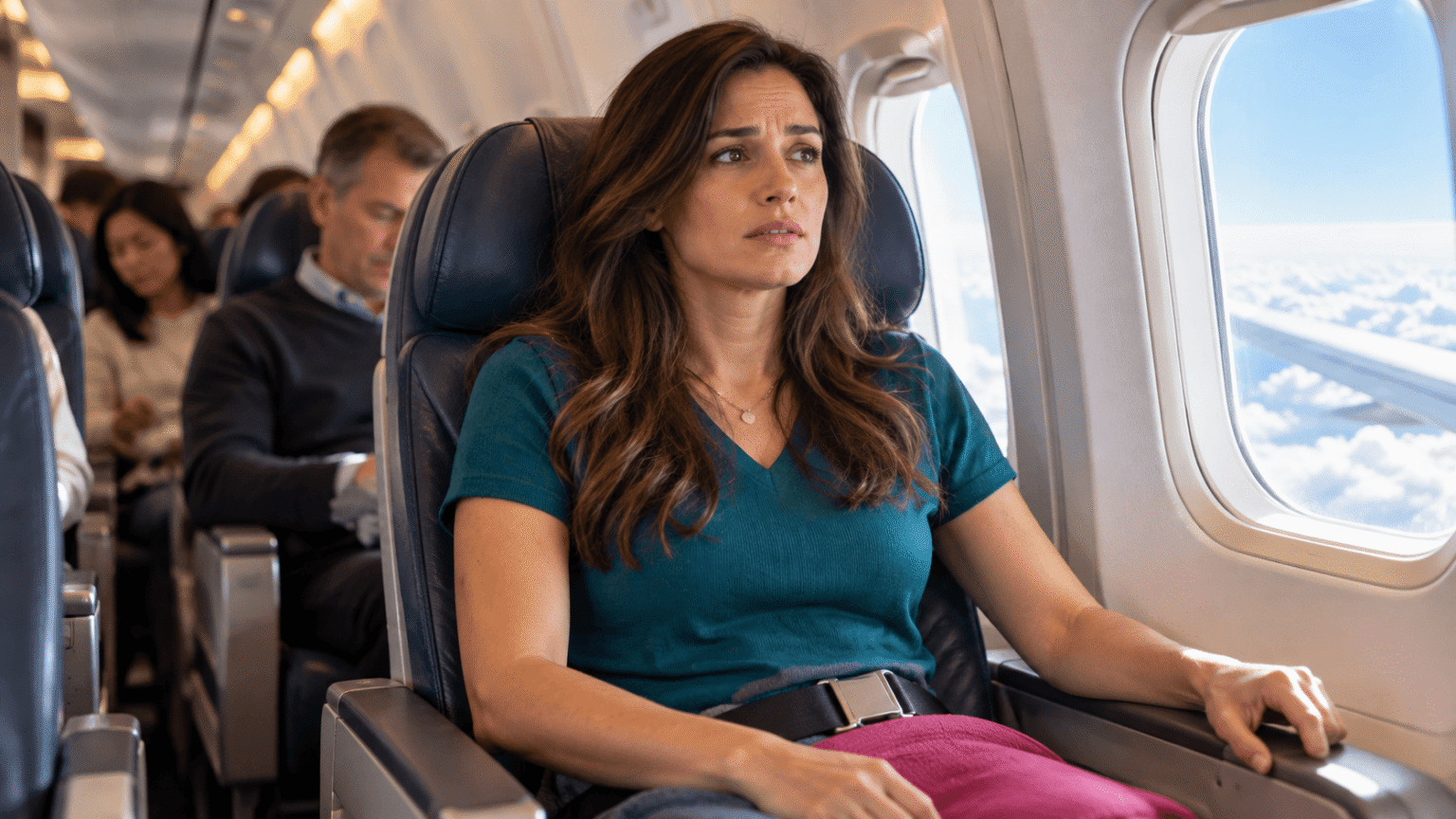
You can understand that turbulence happens during flights and still find yourself reacting strongly when the airplane starts to move. Fear of turbulence anxiety can make a few bumps feel much bigger because your mind may be responding not only to the movement, but also to what you believe that movement means.
Maybe you start thinking ahead:
- “What if it gets worse?”
- “What if I can’t handle this?”
- “What if something goes wrong?”
Before long, your attention is no longer on what is happening. It’s on everything you imagine could happen.
At Silicon Valley Hypnosis Center, I don’t want to simply tell you, “Turbulence is normal, so don’t worry about it.” You may already understand that consciously.
I want to know why your mind keeps producing an unwanted response even when another part of you wants to feel calm.
That’s where deeper hypnotherapy work can become useful. Depending on the individual, the work may involve:
- changing subconscious limiting beliefs
- neutralizing an unwanted emotional connection with a past negative experience
- resolving a conflict between what your conscious mind knows and what your subconscious mind has learned to expect
You can’t control every bump in the air.
But you can work on changing the pattern you bring to the experience.
Jump to Sections
- TLDR Quick Guide to Turbulence Anxiety
- Why Can Turbulence Feel So Uncomfortable?
- How Can Anticipation Affect the Flying Experience?
- Why Does Feeling Out of Control Matter?
- Can a Past Negative Flight Still Affect How You Respond?
- How Can Subconscious Limiting Beliefs Affect Flying?
- What If Your Conscious and Subconscious Mind Disagree?
- Why Isn't Managing the Moment Always Enough?
- What Can Deeper Hypnotherapy Work Involve?
- What Would You Like Flying to Feel Like Instead?
- From Fear of Turbulence Anxiety to a More Useful Pattern
- Key Takeaways
- Frequently Asked Questions
TLDR Quick Guide to Turbulence Anxiety
Here’s the main idea.
Fear of turbulence anxiety may involve much more than the movement of the airplane.
Your response may also be influenced by:
- expectations
- thoughts
- past experiences
- learned associations
- subconscious beliefs
This helps explain why knowing something logically doesn’t always change how you feel.
You might consciously think:
- “I know airplanes experience turbulence.”
At the same time, a subconscious pattern may connect turbulence with:
- danger
- loss of control
- an earlier negative experience
So I don’t want to stop at helping you understand the pattern.
I want to work on changing what may be keeping that pattern in place.
Why Can Turbulence Feel So Uncomfortable?
Let’s start with the obvious.
Turbulence involves movement you don’t control.
You’re sitting in your seat. Someone else is flying the airplane. You don’t know exactly:
- when the movement will start
- how long it will continue
- when the air will become smoother again
For someone who likes knowing what comes next, that uncertainty alone can be uncomfortable.
But here’s where it gets interesting.
The movement and your interpretation of the movement aren’t necessarily the same thing.
Imagine you’re sitting in a car and you feel a bump in the road.
- You probably don’t immediately assume something terrible is about to happen.
- You may simply recognize that the road isn’t perfectly smooth.
On an airplane, the same feeling of unexpected movement can carry a completely different meaning.
This is one reason our hypnotherapy for fear of flying can focus on:
- the associations connected with flying
- the responses connected with flying
- the meaning your mind may have attached to the experience
rather than simply giving you more information about airplanes.
Facts can be useful.
But if facts alone haven’t changed the response, I want to look at what else may be happening.
How Can Anticipation Affect the Flying Experience?
Here’s a question for you.
When does fear of turbulence anxiety begin?
Is it only when the airplane actually starts moving?
For some people, the unwanted pattern may begin much earlier.
Thinking about an upcoming flight can be enough to start imagining what might happen.
Now you’re experiencing today’s thoughts about tomorrow’s flight.
You might:
- check the weather repeatedly
- think about where you’ll sit
- imagine hitting turbulence before you’ve even left home
The mind is very good at rehearsing experiences.
That can be useful when you’re preparing for something.
But if you’re repeatedly rehearsing the outcome you don’t want, your mind may become very familiar with that response.
Our broader work with the challenges we help with hypnotherapy can involve looking at:
- automatic patterns
- the beliefs behind those patterns
- the expectations your mind may be rehearsing
Instead of only asking:
“How do I calm down when turbulence happens?”
I think it’s useful to ask:
“What is my mind expecting before it even happens?”
That question can lead us somewhere deeper.
Why Does Feeling Out of Control Matter?
Most of us like to have some control over what happens to us.
When you’re driving a car, you can:
- slow down
- pull over
- choose another road
Flying doesn’t give you those options.
You’re a passenger.
That can make an old belief about control much more noticeable.
For example, a person may consciously know that they don’t need to control the airplane while still feeling uncomfortable because they aren’t the one making the decisions.
That’s an important distinction.
The problem may not be only the turbulence.
It may also involve:
- what your mind has learned about not being in control
- what you believe uncertainty means
- whether your mind believes staying alert is somehow useful
This is why simply saying “relax” often isn’t very useful.
If an underlying belief says you must stay alert or in control to be okay, telling yourself to relax doesn’t address the belief.
I want to know what’s underneath the response.
Once we understand that, we can begin working toward a more useful way of experiencing the situation.
Can a Past Negative Flight Still Affect How You Respond?
Suppose you experienced a very uncomfortable flight years ago.
The flight ended.
But did your mind leave the experience behind?
Sometimes a past negative experience can become connected with a present response.
Your mind may have learned an association between:
- turbulence
- an outcome you don’t want
- an uncomfortable memory
- an expectation about what might happen next
even though your conscious mind understands that a future flight is a different experience.
This doesn’t mean every person with fear of turbulence anxiety has a specific past event that caused it.
I wouldn’t make that assumption.
But when a past negative experience is relevant, deeper hypnotherapy work may focus on:
- neutralizing the unwanted emotional connection associated with that experience
- changing the response attached to that experience
- reducing the influence it may still have on future flights
We’re not trying to erase the past.
We’re also not trying to prove that every detail of a memory is perfectly accurate.
Memory isn’t a video recording.
We’re interested in the meaning and response that may have been carried forward.
You can’t change the flight you took five years ago.
But you may be able to change what that experience means for the flight you’re taking next month.
How Can Subconscious Limiting Beliefs Affect Flying?
Sometimes the deeper pattern involves a belief.
You may consciously think:
“I want to feel comfortable flying.”
But underneath that thought may be another belief:
- “If I’m not in control, I’m not safe.”
- “If I stop worrying, I won’t be prepared.”
Now you have a conflict.
Trying to force yourself to relax while a deeper belief is telling you to remain on guard can feel like driving with:
- one foot on the gas
- another on the brake
You can press the gas harder.
But I think it’s more useful to find out why the brake is on.
Patterns involving fear and unwanted limitations can sometimes be influenced by:
- beliefs
- associations
- expectations that operate without much conscious thought
Hypnotherapy can provide a way to:
- identify subconscious limiting beliefs that may be helping drive the unwanted pattern
- explore why those beliefs are still active
- work toward changing them
That’s very different from repeating:
“Flying is fine.”
until you hope you believe it.
If a deeper belief is getting in the way, let’s work on the deeper belief.
What If Your Conscious and Subconscious Mind Disagree?
Have you ever said this?
“I know I’m okay, but I still feel this way.”
That’s a useful clue.
Your conscious mind may understand the situation one way while your subconscious mind has learned another response.
Imagine having two navigation systems in your car:
- one says turn right
- the other says turn left
It doesn’t matter how clearly you understand the directions if the two systems keep fighting over where you’re going.
Something similar can happen with fear of turbulence anxiety.
Your conscious mind may know what you want:
- “I want to sit comfortably.”
- “I want to trust the process.”
- “I want to stay focused on my trip.”
Meanwhile, an automatic pattern keeps pulling your attention toward everything that might go wrong.
Deeper hypnotherapy can work on:
- resolving that conflict
- reducing the pull of the old response
- helping the conscious and subconscious mind move in the same direction
The goal isn’t to fight with yourself.
It’s to help your mind develop a response that better matches what you consciously want today.
Why Isn’t Managing the Moment Always Enough?
There’s nothing wrong with having useful ways to stay calmer during a flight.
You may:
- redirect your attention
- listen to something
- talk with your travel companion
- use another strategy that helps you stay present
Those approaches can be useful.
But I want to ask another question:
Do you want to keep managing the same unwanted pattern every time you fly, or would it be useful to explore what keeps creating the pattern?
That’s where deeper work comes in.
Hypnotherapy for passengers experiencing turbulence anxiety can involve working with:
- beliefs
- learned associations
- subconscious responses connected with turbulence
Think about a weed in a garden.
- You can keep trimming what appears above the ground.
- Or you can look underneath and see what’s helping it grow.
For me, that’s an important difference.
Managing the moment can be useful.
Changing the deeper pattern is where I want the work to go.
What Can Deeper Hypnotherapy Work Involve?
When people hear “hypnotherapy for flying,” they may imagine that I’m simply going to tell them over and over that airplanes are safe.
That’s not what I mean by deeper work.
At our center, hypnotherapy can focus on the individual patterns connected with what you want to change.
Depending on what’s relevant, that may include working with:
- Past negative experiences. If an earlier experience still carries an unwanted emotional connection, we can work on changing the response attached to that experience rather than continuing to carry it forward.
- Subconscious limiting beliefs. If a belief about control, uncertainty, or your ability to handle the experience is helping drive the pattern, we can identify it and work toward a more useful belief.
- Conscious and subconscious conflicts. If you consciously want to relax while another part of your mind believes it needs to stay alert, we can explore and work on resolving that conflict.
- The response you actually want. I don’t want to spend all of our time focused on what you don’t want. We also want to strengthen the thoughts, feelings, and behaviors you’d rather experience.
This is the deeper approach behind hypnotherapy for travelers who feel nervous about flying.
We aren’t promising:
- a perfect flight
- that you’ll never notice turbulence again
We’re working on changing what your mind does with the experience.
What Would You Like Flying to Feel Like Instead?
People often begin by telling me what they don’t want.
For example:
- “I don’t want to worry about turbulence.”
- “I don’t want to spend the whole flight waiting for something to happen.”
- “I don’t want to feel out of control.”
I understand.
Now let’s turn the question around.
What would you like instead?
Maybe you’d like to:
- sit in your seat and remain focused on your trip
- notice turbulence without immediately imagining what it means
- trust yourself to handle the experience
- think about an upcoming flight without mentally rehearsing everything that could go wrong
Now we have a destination.
I think that’s important because change isn’t only about moving away from an unwanted response.
It’s also about knowing what you want to move toward.
From Fear of Turbulence Anxiety to a More Useful Pattern
If turbulence has become connected with an unwanted response, you may already know that telling yourself not to worry hasn’t solved the problem.
You probably don’t need someone to tell you to:
- “Just relax.”
You need to understand what may be helping the old pattern continue.
That’s why I like to go deeper.
With fear of turbulence anxiety, that might mean:
- exploring a past negative experience
- changing a limiting belief about control
- resolving a conflict between the part of you that wants to feel calm and the part that has learned to stay on alert
At Silicon Valley Hypnosis Center, our goal is not to promise that every future flight will feel perfect.
Hypnotherapy also isn’t a substitute for appropriate medical or mental health care when that care is needed.
Our goal is to:
- work on the patterns that may be getting in your way
- help you develop responses that better support how you want to travel
If you’d like to discuss your own flying-related goals, you can book a call with Dan Ross and talk about whether hypnotherapy may be appropriate for what you want to change.
You can’t make the sky perfectly smooth.
But you can work on what turbulence means to your mind.
Key Takeaways
Fear of turbulence anxiety can involve more than the physical movement of an airplane. Expectations, beliefs, earlier experiences, uncertainty, and learned subconscious patterns can all influence how you experience a flight.
- Turbulence may feel more difficult when your mind connects movement with an unwanted meaning.
- Anticipating turbulence can sometimes become part of the pattern before a flight begins.
- A lack of control may be connected with beliefs that make flying more uncomfortable.
- Past negative experiences can sometimes carry unwanted emotional connections into future flights.
- Subconscious limiting beliefs may work against your conscious desire to feel calm.
- Your conscious and subconscious mind can sometimes pull in different directions.
- Managing an uncomfortable moment can be useful, but deeper hypnotherapy work can explore what may be creating the repeated pattern.
- Hypnotherapy may help change learned associations, limiting beliefs, and internal conflicts without guaranteeing a particular result.
I invite you to consider one final question.
Instead of only asking:
“How can I stop worrying about turbulence?”
ask:
“What has my mind learned about turbulence, and what would I rather learn instead?”
That shift takes us beyond simply understanding the problem and gives us something useful to work toward.
Frequently Asked Questions
Why can turbulence make me feel uncomfortable even when I know flying is common?
Your conscious understanding and your automatic response don’t always match.
Your mind may have connected turbulence with:
- uncertainty
- lack of control
- a past negative experience
- an expectation about what could happen
Understanding that difference can help us explore the deeper pattern instead of simply telling you to calm down.
Can fear of turbulence anxiety begin before the flight?
For some people, an unwanted pattern can begin while thinking about an upcoming flight rather than during the flight itself.
Your mind can:
- imagine possible situations
- begin responding to those thoughts before anything has actually happened
Hypnotherapy can focus on:
- expectations
- beliefs
- learned associations that may be connected with that pattern
Can hypnotherapy help change how I respond to turbulence?
Hypnotherapy can support personal-change work involving:
- subconscious beliefs
- learned associations
- past negative experiences
- conflicts between your conscious goals and automatic responses
The goal is to:
- work with patterns that may be contributing to the response
- develop more useful alternatives
Individual experiences vary, so hypnotherapy should not be presented as guaranteeing that you’ll always feel calm or never experience discomfort while flying.
Do I need to have had a bad flight for turbulence to bother me?
No.
A past negative flight is only one possible influence and shouldn’t be assumed to be the cause of someone’s response.
Other influences may include:
- beliefs about control
- uncertainty
- stories you’ve heard
- repeated expectations
- other learned associations
These may also play a role in how you experience flying.
Will hypnotherapy make me stop noticing turbulence?
That’s not the goal.
You can notice that an airplane is moving without necessarily giving that movement the same unwanted meaning or response.
Deeper hypnotherapy work can focus on:
- changing beliefs
- changing learned patterns connected with your experience
rather than promising that you won’t notice normal events during a flight.