

The signs of high-functioning anxiety are not always obvious because many people appear successful, dependable, and capable on the outside while privately experiencing stress, overthinking, or constant pressure to perform.
The term “high-functioning anxiety” is commonly used to describe situations where someone continues managing daily responsibilities while experiencing internal patterns such as excessive worry, perfectionism, difficulty relaxing, or feeling the need to always stay productive.
This article explores common patterns associated with high-functioning anxiety, why they may develop, and how approaches like hypnotherapy can support greater self-awareness, relaxation, confidence, and personal growth.
At Silicon Valley Hypnosis Center, Dan Ross works with individuals who want to better understand their mindset patterns and develop practical strategies for approaching challenges with greater clarity and confidence.
Jump to:
- TLDR – Quick Guide
- What Is High-Functioning Anxiety?
- 13 Common Patterns Associated With High-Functioning Anxiety
- How to Recognize High-Functioning Anxiety
- Why These Signs Often Go Unnoticed
- How Hypnotherapy Supports Self-Awareness and Mindset Development
- How to Build Greater Awareness and Confidence Moving Forward
- How Hypnotherapy Can Support High-Functioning Anxiety Patterns
- Why Clients Choose Silicon Valley Hypnosis Center
- Ready to Better Understand Your Thought Patterns?
- Key Takeaways
- FAQs About High-Functioning Anxiety Patterns
- Disclaimer
TLDR – Quick Guide
- High-functioning anxiety is a commonly searched term used to describe people who appear successful while experiencing internal pressure, worry, or stress.
- These patterns can show up through perfectionism, overthinking, difficulty relaxing, people-pleasing, or constantly feeling the need to achieve.
- Everyone experiences stress differently, and these patterns do not define who someone is.
- Understanding thoughts, behaviors, and emotional responses can create opportunities for greater self-awareness.
- Hypnotherapy focuses on relaxation, mindset development, confidence building, and exploring subconscious patterns that influence everyday experiences.
What Is High-Functioning Anxiety?
Understanding the Term High-Functioning Anxiety
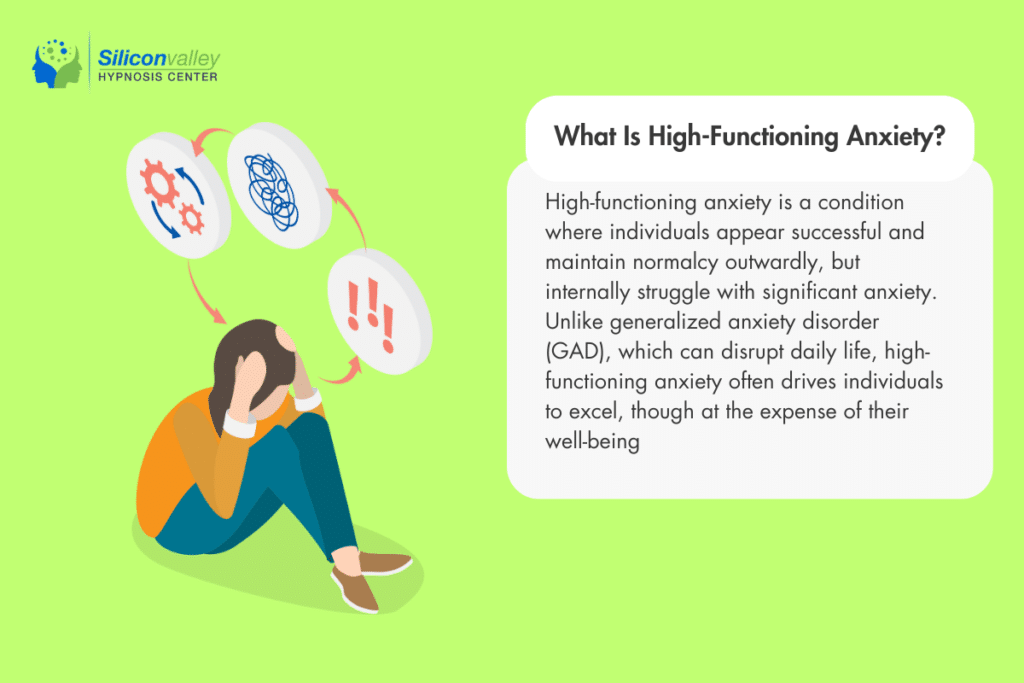
High-functioning anxiety is a commonly used phrase to describe people who maintain responsibilities, achieve goals, and appear capable while privately experiencing patterns such as persistent worry, perfectionism, or difficulty slowing down.
Unlike situations where stress may cause someone to avoid responsibilities completely, some individuals respond by becoming highly productive, organized, or focused on achieving more.
The important thing to understand is that outward success does not always reflect someone’s internal experience. A person can appear confident and accomplished while still feeling pressure, uncertainty, or difficulty finding balance.
High-Functioning Anxiety vs. Everyday Stress
Everyone experiences stress from time to time. Deadlines, important decisions, relationships, and life changes can naturally create moments of pressure.
However, some people notice that their thoughts remain active even after a stressful situation has passed. They may spend significant time reviewing conversations, preparing for possible problems, or feeling responsible for getting everything right.
The difference is often found in how frequently these patterns appear and how much attention they take in everyday life.
The Paradox of Appearing Successful
One reason these patterns can go unnoticed is because they are often connected to traits that others admire.
Someone may be viewed as:
- Reliable
- Organized
- Responsible
- Driven
- Detail-oriented
These qualities can support success in many areas of life. However, some individuals may also feel internal pressure to maintain these standards or worry about what might happen if they slow down.
For example, someone may consistently perform well at work while privately spending hours replaying decisions, preparing excessively, or struggling to fully relax.
Understanding high-functioning anxiety patterns is not about judging yourself or labeling your personality. Instead, it can be an opportunity to recognize how your thoughts, habits, and expectations influence your daily experience.
The next section explores some of the most common patterns people notice and how they may appear in emotional, behavioral, physical, and social situations.
13 Common Patterns Associated With High-Functioning Anxiety
People experience stress and pressure differently. The following patterns are commonly discussed when describing high-functioning anxiety, but they are not a diagnosis or a checklist that defines someone’s experience.
Instead, these examples can help individuals reflect on their habits, thought patterns, and daily routines. Recognizing these patterns can create opportunities for greater self-awareness and personal growth.
Emotional and Behavioral Patterns
1. Perfectionism Disguised as High Standards
Many high-achieving individuals set ambitious goals and take pride in doing their best. However, some people may notice that their desire to perform well becomes connected to constant self-pressure or fear of making mistakes.
This can look like spending extra time reviewing work, feeling uncomfortable when something is not perfect, or placing unrealistic expectations on yourself.
Developing awareness around these standards can help you create a healthier balance between achievement and self-compassion.
2. Overthinking and Replaying Situations
Some people spend significant time analyzing conversations, decisions, or future possibilities.
You may find yourself asking:
- “Did I handle that correctly?”
- “What if something goes wrong?”
- “Could I have done something differently?”
Reflection can be valuable, but excessive mental review may make it difficult to fully relax or stay present.
Learning to recognize these thought patterns is often the first step toward creating more intentional responses.
3. Procrastination or Overpreparation
While procrastination is often associated with avoiding tasks, some people experience the opposite pattern: preparing far beyond what is necessary.
This may involve repeatedly checking details, researching extensively, or waiting until everything feels completely ready before moving forward.
Finding a balance between preparation and action can help build confidence in your own abilities.
4. People-Pleasing Tendencies
Some individuals feel a strong desire to support others, meet expectations, or avoid disappointing people.
While being dependable can be a positive quality, constantly prioritizing everyone else’s needs may make it difficult to recognize your own limits and priorities.
Developing stronger awareness of your boundaries can support healthier relationships and more balanced decision-making.
5. Fear of Making Mistakes Despite Success
A person may achieve many goals and still question whether they are doing enough.
This pattern can appear as:
- Doubting accomplishments
- Comparing yourself to others
- Feeling pressure to constantly prove yourself
Recognizing your progress and strengths can help create a more balanced perspective.
Physical and Lifestyle Patterns
6. Difficulty Fully Relaxing
Some people find that slowing down feels challenging, even when they have completed their responsibilities.
You may notice that your mind continues planning, reviewing, or preparing for the next task instead of allowing yourself to enjoy downtime.
Practicing relaxation techniques can help create more intentional moments of rest.
7. Trouble Maintaining a Healthy Sleep Routine
An active mind can sometimes make it difficult to transition from a busy day into a restful evening routine.
Some individuals notice they continue thinking about tasks, conversations, or future responsibilities when they are trying to relax.
Creating consistent routines around rest and relaxation can support greater balance.
8. Feeling Physically Tense During Stressful Moments
Stressful situations can sometimes influence how people carry tension in their bodies.
Some individuals notice habits such as:
- Tight shoulders
- Clenching their jaw
- Feeling physically restless
Becoming more aware of these responses can help you recognize when it may be time to slow down and practice relaxation.
9. Constant Need to Stay Busy
Some people associate productivity with feeling secure or successful.
This may lead to filling schedules constantly, struggling with downtime, or feeling uncomfortable when there is nothing urgent to accomplish.
Creating space for reflection and recovery can be an important part of maintaining a sustainable lifestyle.
10. Difficulty Switching Off From Responsibilities
Even after completing important tasks, some individuals continue thinking about what needs to happen next.
This can make it challenging to be fully present during personal time, hobbies, or conversations with others.
Developing mindfulness and awareness can help you reconnect with the present moment.
Social and Relationship Patterns
11. Avoiding Vulnerability
Some people appear confident and capable while finding it difficult to openly share uncertainty or ask for support.
This may come from a desire to maintain independence or avoid feeling like a burden to others.
Recognizing that vulnerability can strengthen relationships may help create deeper connections.
12. Difficulty Saying “No”
Being helpful and reliable are valuable qualities, but consistently agreeing to everything can create unnecessary pressure.
Some individuals take on extra responsibilities because they worry about disappointing others or appearing incapable.
Learning to communicate boundaries can support healthier relationships and better personal balance.
13. Maintaining a Successful Image While Feeling Internal Pressure
One of the reasons high-functioning anxiety patterns can be difficult to notice is because someone may appear organized, productive, and successful externally.
However, internally they may experience ongoing pressure, self-doubt, or difficulty slowing down.
Understanding this difference between outward appearance and internal experience can encourage greater self-awareness.
Recognizing these patterns is not about labeling yourself or identifying with every example. Everyone experiences stress, ambition, responsibility, and uncertainty differently.
The goal is simply to better understand your own thoughts, habits, and responses so you can make intentional choices that support your personal goals.
Next, we’ll explore how these patterns may appear in everyday life and how people can develop greater awareness around them.
How to Recognize High-Functioning Anxiety
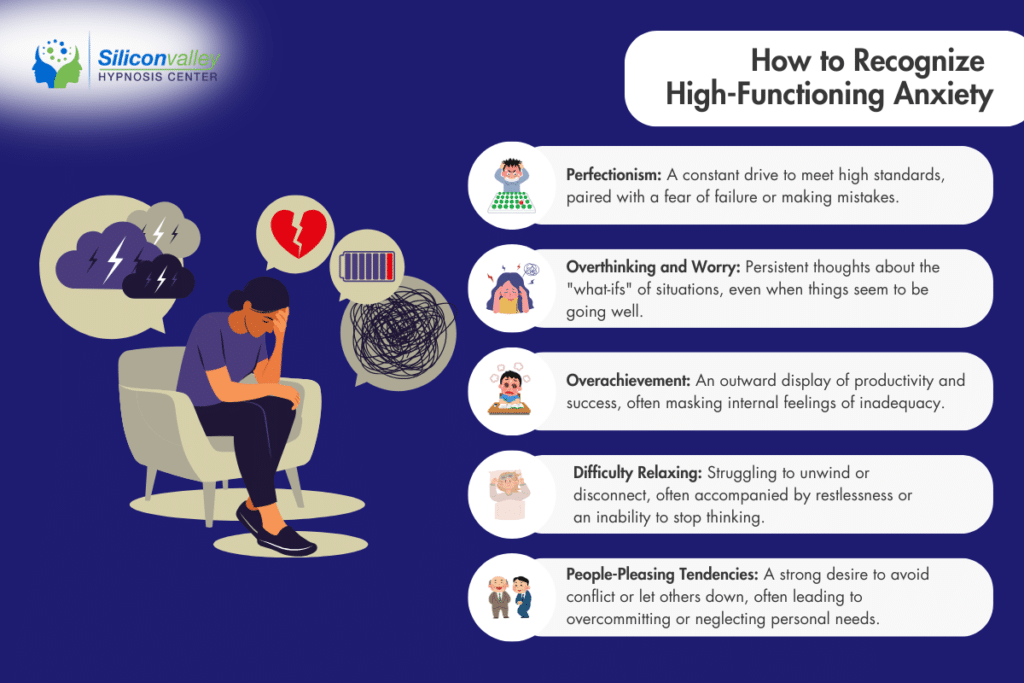
High-functioning anxiety patterns can sometimes blend into everyday routines because many of the behaviors associated with them may also be viewed positively.
Being organized, responsible, productive, and ambitious are valuable qualities. The difference often comes down to how these behaviors affect your ability to relax, enjoy life, and maintain balance.
In Personal Life
Some individuals may notice difficulty fully disconnecting from responsibilities, even during free time.
Examples may include:
- Constantly thinking about future tasks
- Struggling to enjoy downtime
- Feeling responsible for keeping everything organized
- Finding it difficult to ask others for support
Over time, greater awareness of these habits can help individuals create more balanced routines and prioritize personal well-being.
In Professional Settings
At work, these patterns may appear as strong dedication, attention to detail, or a desire to consistently perform well.
However, some people may notice they:
- Take on more responsibilities than necessary
- Spend excessive time reviewing work
- Feel uncomfortable making mistakes
- Struggle to disconnect after work hours
For professionals looking to build confidence and manage pressure more effectively, approaches such as hypnotherapy for anxiety and stress relief focus on relaxation, mindset development, and building practical strategies.
In Social Situations
Some individuals may find social situations challenging because they spend significant time thinking about how they are perceived by others.
This may include:
- Overanalyzing conversations
- Worrying about impressions
- Avoiding situations where they feel judged
For those interested in exploring confidence and communication patterns, hypnotherapy for social anxiety focuses on self-awareness, confidence building, and personal development.
Understanding where these patterns appear is an important step toward creating positive change. Whether they show up at work, in relationships, or during personal time, awareness allows you to make more intentional choices about how you want to respond.
In the next section, we’ll explore why these patterns often go unnoticed and how people can begin developing greater awareness.
Why These Signs Often Go Unnoticed
High-functioning anxiety patterns can be difficult to recognize because many of the behaviors connected to them are often viewed positively.
Being responsible, productive, organized, and ambitious are valuable qualities. However, when these behaviors are driven by constant pressure, fear of mistakes, or difficulty slowing down, some people may find it challenging to maintain balance.
Understanding these patterns is not about identifying a problem with who you are. Instead, it can help you recognize your habits, expectations, and thought processes with greater awareness.
They Often Look Like Success
One reason these patterns are overlooked is because they may appear as achievements from the outside.
Someone may be seen as:
- The person everyone can rely on
- The employee who always delivers
- The friend who always helps
- The person who handles pressure well
These qualities can be strengths. However, some individuals may privately feel that they always need to maintain a certain standard or prove themselves.
Recognizing the difference between healthy ambition and constant internal pressure can help create more balance.
Productivity Can Hide Stress Patterns
Many people associate being busy with being successful.
A full schedule, constant achievement, and staying productive can create a sense of accomplishment. However, some individuals may notice they struggle to pause, rest, or enjoy moments without feeling like they should be doing something else.
Learning to recognize these patterns can encourage a healthier relationship with productivity and personal goals.
People May Minimize Their Own Experiences
Some individuals dismiss their own stress because they believe:
- “Other people have it worse.”
- “I’m still getting things done.”
- “I shouldn’t feel this way because everything looks fine.”
However, acknowledging your own experiences does not mean you are failing. Self-awareness is often the first step toward understanding your thoughts, habits, and personal needs.
Society Often Rewards Overachievement
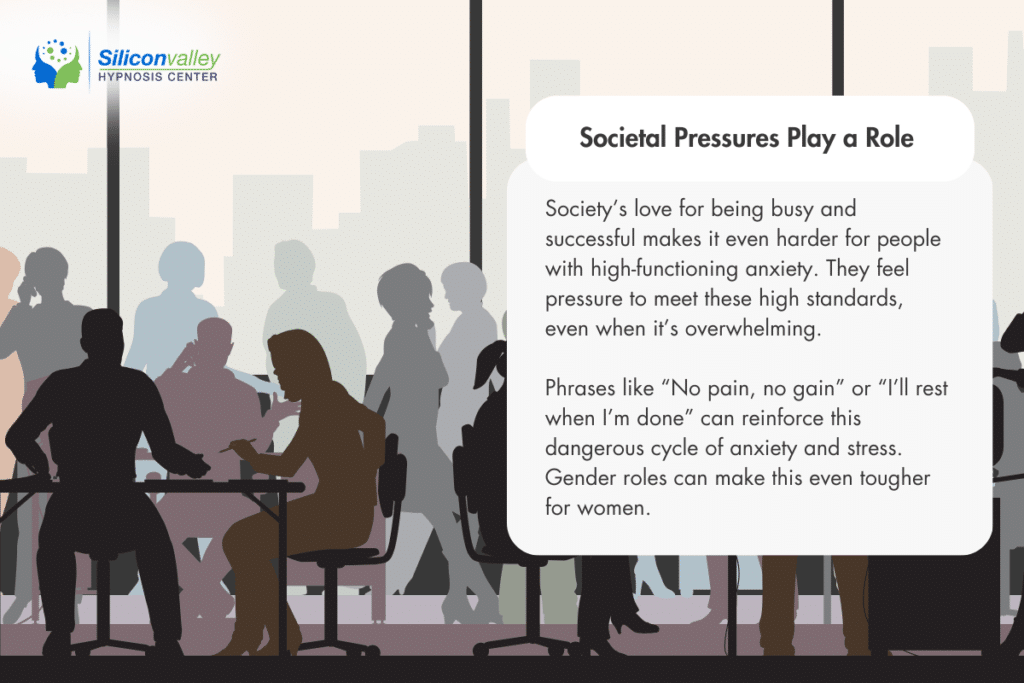
Many environments celebrate being constantly available, highly productive, and always improving.
Messages around success can sometimes create pressure to keep achieving without allowing enough time for reflection or rest.
Understanding these external influences can help individuals decide which expectations genuinely align with their own values.
Recognizing high-functioning anxiety patterns is not about removing ambition or changing your personality. Many of these qualities—such as dedication, responsibility, and attention to detail—can be valuable strengths.
The goal is finding a healthier balance where success and personal well-being can exist together.
The next section explores how hypnotherapy can support self-awareness and mindset development for individuals who want to better understand these patterns.
How Hypnotherapy Supports Self-Awareness and Mindset Development
Hypnotherapy provides a structured environment for exploring thoughts, beliefs, habits, and subconscious patterns that may influence everyday experiences.
At Silicon Valley Hypnosis Center, Dan Ross uses hypnotherapy techniques focused on relaxation, reflection, visualization, and mindset development. The goal is to help individuals better understand their internal patterns while building practical strategies that support confidence and personal growth.
You can learn more about how hypnotherapy works and what to expect during a hypnotherapy session.
Exploring Subconscious Thought Patterns
Many habits and reactions happen automatically because they are connected to familiar ways of thinking.
Hypnotherapy can help individuals become more aware of:
- Repeated thought patterns
- Personal beliefs
- Emotional responses
- Everyday habits
This awareness can create space to consider new perspectives and more intentional ways of approaching situations.
Building Greater Relaxation and Focus
A busy mind can make it difficult to slow down and reflect.
Through guided relaxation and focused attention, hypnotherapy encourages a calm environment where individuals can explore their thoughts more clearly.
Many people use relaxation practices as part of their broader approach to managing daily stress and building emotional awareness.
For individuals interested in exploring confidence in performance situations, our resource on hypnosis for performance anxiety discusses how mindset and preparation can influence how people approach challenging moments.
Developing More Supportive Perspectives
The way people interpret situations can influence how they respond.
For example, someone may automatically view a mistake as failure, while another person may view it as an opportunity to learn.
Hypnotherapy can support reflection around these perspectives and encourage more constructive ways of thinking that align with personal goals.
Strengthening Confidence and Personal Growth
Many individuals explore hypnotherapy because they want to develop greater confidence, self-awareness, and resilience.
The process focuses on understanding yourself better and building practical strategies that support your personal development journey.
Understanding the Research Behind Hypnosis
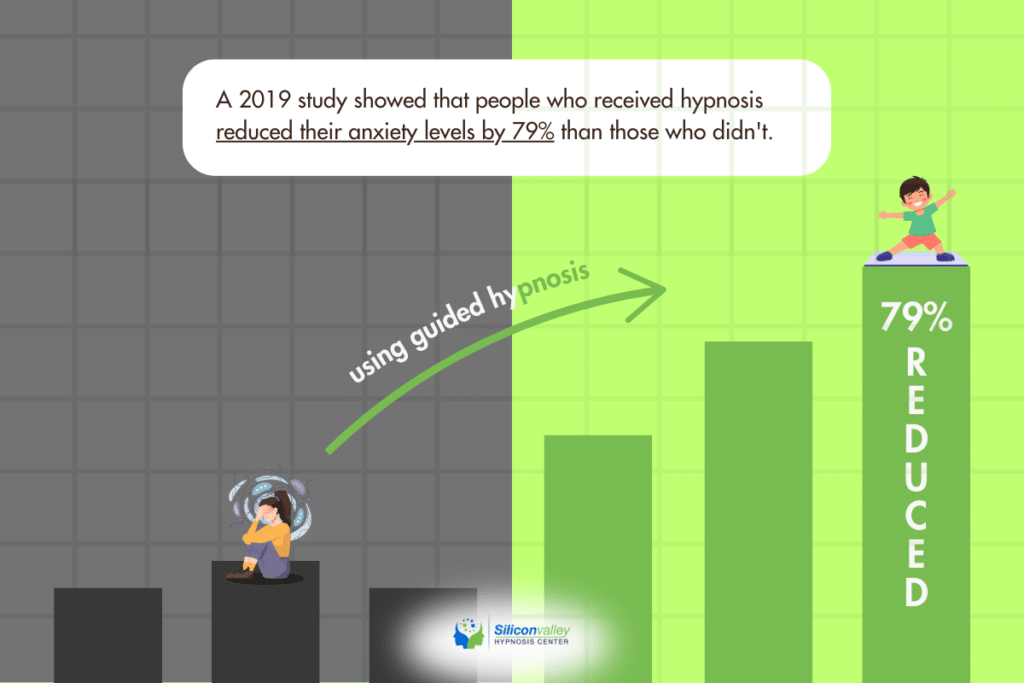
Research around hypnosis continues to explore how focused attention, relaxation, and suggestion may influence thoughts, behaviors, and personal experiences.
Rather than viewing hypnosis as a quick solution, it is best understood as a structured practice that encourages focus, reflection, and mindset development.
Research has explored hypnosis in areas related to relaxation, stress, attention, and personal change. You can explore additional information about the science of hypnosis through resources such as the American Psychological Association overview of hypnosis.
A published study exploring hypnosis and anxiety-related experiences can also be reviewed here: research on hypnosis and anxiety.
As with any personal-development approach, experiences vary between individuals. Hypnotherapy works best when it aligns with a person’s goals, willingness to participate, and commitment to personal growth.
Understanding high-functioning anxiety patterns is ultimately about creating greater awareness of yourself.
Whether your goal is improving relaxation, building confidence, developing healthier habits, or creating more balance between achievement and personal life, exploring your mindset can be a valuable part of continued growth.
How to Build Greater Awareness and Confidence Moving Forward
Understanding the signs of high-functioning anxiety is only the beginning. The next step is learning how to respond to these patterns with greater awareness and intention.
For many people, the goal is not to eliminate ambition, productivity, or high standards. These qualities can be valuable strengths. Instead, the focus is creating a healthier relationship with achievement, responsibility, and personal expectations.
Create Space Between Thoughts and Reactions
Many everyday responses happen automatically. A stressful email, an important meeting, or an unexpected change may immediately trigger familiar thoughts or behaviors.
Developing awareness allows you to pause and recognize:
- What am I thinking right now?
- Is this thought helping me move forward?
- Is there another way to approach this situation?
This simple awareness can create more intentional responses over time.
Practice Relaxation and Mindfulness
When life feels constantly busy, slowing down can become a skill that requires practice.
Relaxation techniques, breathing exercises, visualization, and mindfulness practices can encourage greater awareness of the present moment and create opportunities to step away from constant mental activity.
These practices are often incorporated into mindset-focused approaches such as hypnotherapy for anxiety and stress support.
Strengthen Personal Boundaries
Many people who experience high-functioning anxiety patterns are highly dependable and committed to helping others.
However, consistently placing other people’s needs ahead of your own may create additional pressure over time.
Learning to communicate boundaries, prioritize your goals, and recognize your own needs can support a more balanced approach to relationships and responsibilities.
Develop Confidence Through Self-Awareness
Confidence does not mean never experiencing uncertainty. It means developing trust in your ability to handle challenges and make thoughtful decisions.
For individuals who want to explore confidence development, hypnotherapy can provide a structured space for reflection, visualization, and mindset development.
Building awareness around high-functioning anxiety patterns is a personal process. It is not about changing your personality or removing the qualities that contribute to your success.
Instead, it is about creating more balance—where achievement, confidence, relaxation, and personal growth can exist together.
How Hypnotherapy Can Support High-Functioning Anxiety Patterns
Hypnotherapy focuses on creating a calm, focused environment where individuals can explore subconscious patterns, beliefs, habits, and responses.
At Silicon Valley Hypnosis Center, we use hypnotherapy as a mindset and personal-growth approach. Sessions with Dan Ross may include guided relaxation, visualization, and reflective techniques designed to support greater self-awareness, confidence, and emotional balance.
The purpose is not to diagnose or label experiences. Instead, the focus is understanding patterns and developing practical strategies that align with your personal goals.
Exploring the Patterns Behind Overthinking
Overthinking often develops from a desire to prepare, avoid mistakes, or feel more certain about future outcomes.
Hypnotherapy can provide an opportunity to reflect on these thought patterns and explore different perspectives.
By increasing awareness of how thoughts influence actions, individuals can begin making more intentional choices.
Supporting Confidence During Challenging Situations
Many people with high-functioning anxiety patterns are capable and successful but still question whether they are doing enough.
Hypnotherapy can support confidence-building by helping individuals focus on:
- Personal strengths
- Positive perspectives
- Goal-focused thinking
- Constructive self-talk
For individuals interested in performance-related confidence, our resource on hypnosis for performance anxiety explores how mindset strategies can support confidence during important moments.
Developing a More Balanced Relationship With Achievement
Ambition and personal growth can be positive qualities. The challenge comes when achievement becomes connected to constant pressure or unrealistic expectations.
Hypnotherapy can help individuals reflect on their relationship with success and explore healthier ways of approaching goals.
Creating Practical Mindset Strategies
Personal growth often involves developing tools that can be applied outside of sessions.
These may include:
- Visualization exercises
- Relaxation techniques
- Self-reflection practices
- Confidence-building strategies
These tools can become part of an ongoing approach to personal development.
Why Clients Choose Silicon Valley Hypnosis Center
At Silicon Valley Hypnosis Center, we understand that many high-achieving individuals want support that matches their goals, lifestyle, and personal values.
Dan Ross works with clients who want to better understand their mindset patterns, strengthen confidence, and develop practical strategies for navigating pressure and uncertainty.
Our approach focuses on creating a supportive environment where individuals can reflect, learn, and continue growing at their own pace.
You can explore individual experiences through our client testimonials.
Ready to Better Understand Your Thought Patterns?
If you recognize some of these high-functioning anxiety patterns and want to develop greater awareness, confidence, and balance, exploring your mindset can be a valuable next step.
At Silicon Valley Hypnosis Center, Dan Ross provides hypnotherapy sessions focused on relaxation, self-awareness, and personal growth strategies designed around your goals.
Key Takeaways
- The term signs of high-functioning anxiety is commonly used to describe patterns such as perfectionism, overthinking, constant pressure, and difficulty relaxing.
- These patterns do not define a person’s identity and may appear differently from one individual to another.
- Recognizing thoughts, habits, and emotional responses can encourage greater self-awareness.
- Hypnotherapy focuses on relaxation, mindset development, confidence building, and personal growth.
- Creating balance between achievement and well-being is an ongoing personal journey.
FAQs About High-Functioning Anxiety Patterns
Is high-functioning anxiety a diagnosis?
The phrase “high-functioning anxiety” is a commonly used term to describe certain patterns of thoughts, behaviors, and experiences. It is not used on this page as a diagnosis, but rather as an educational way to discuss how some people experience internal pressure while managing daily responsibilities.
Why do successful people sometimes experience high levels of stress?
Success and stress can exist together. Some people who are highly responsible or achievement-oriented may place significant pressure on themselves, making it difficult to relax even when things are going well.
Can hypnotherapy help with overthinking and stress patterns?
Hypnotherapy can support self-awareness, relaxation, and mindset development by helping individuals explore thoughts, beliefs, and habits connected to everyday experiences.
What happens during a hypnotherapy session?
A hypnotherapy session typically involves guided relaxation and focused attention. You remain aware and in control while exploring personal goals and developing mindset strategies.
How many hypnotherapy sessions are needed?
The number of sessions varies depending on each person’s goals, experiences, and preferences. Dan Ross can discuss your objectives and help determine an approach that fits your personal development journey.
Disclaimer
While hypnosis has many scientifically documented beneficial effects, it is not a substitute for medical, psychological, or psychiatric treatment. We are not licensed mental health practitioners, and do not claim to diagnose, treat, cure, or prevent any disease or illness. Please seek care from a licensed mental health professional or medical doctor for these purposes.
This article is for informational purposes only and is not meant to provide medical or mental health advice. All terms are used as common vernacular rather than diagnostic language.